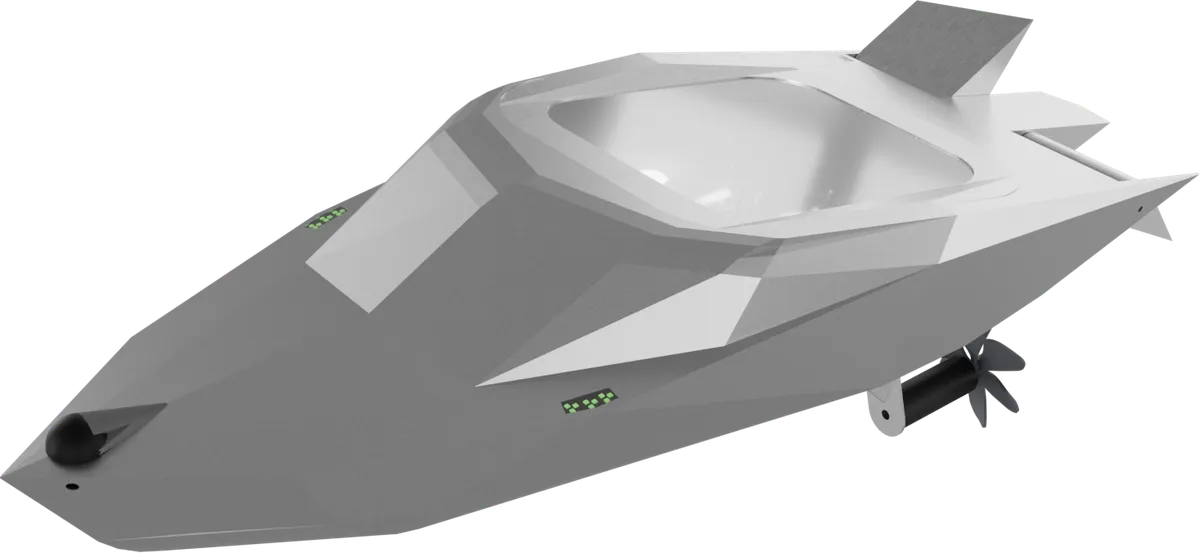

NTNU Trondheim · Autonomous submersible · 2027

It planes on the surface.Then it goes under.

A student-built autonomous submarine from NTNU Trondheim, with its own drone in the hull.
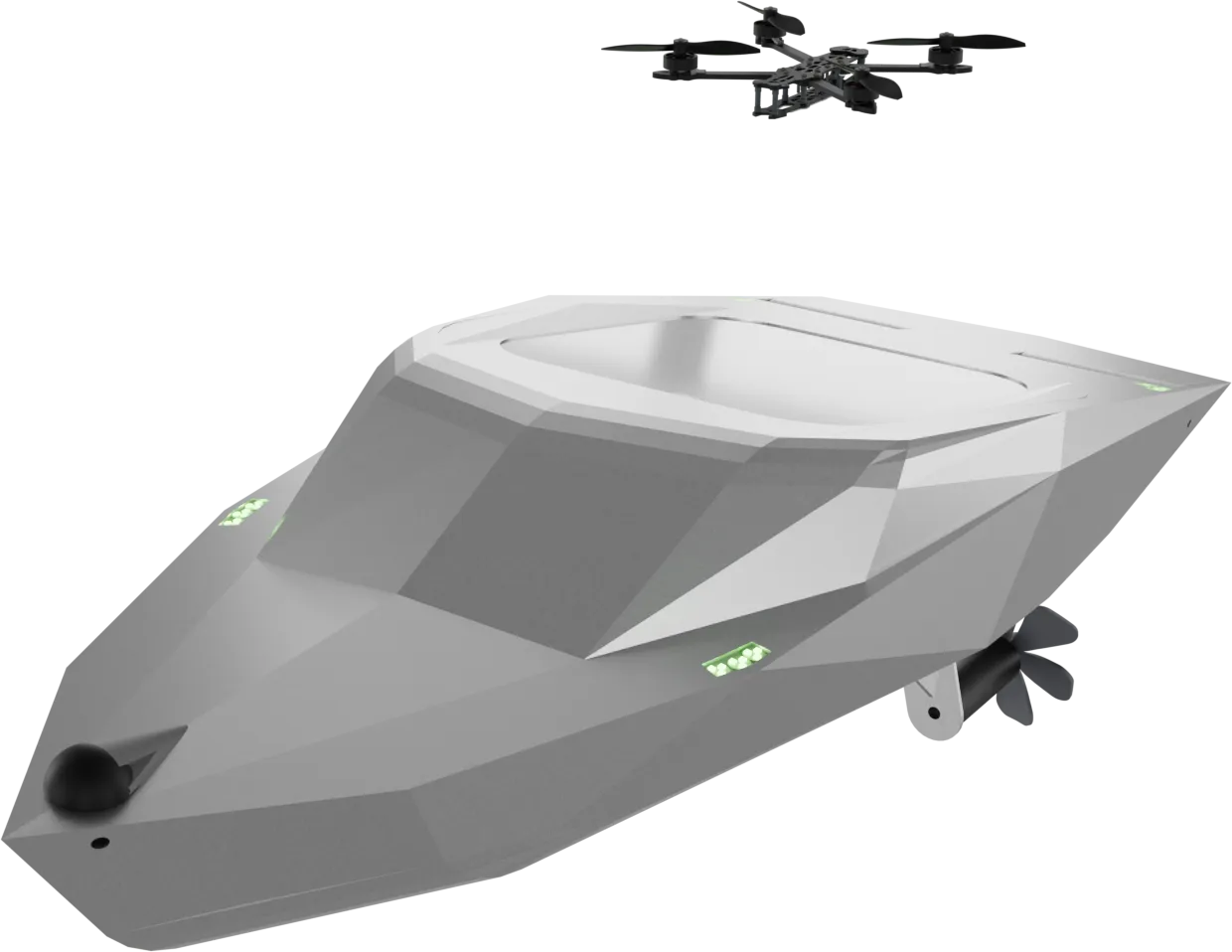
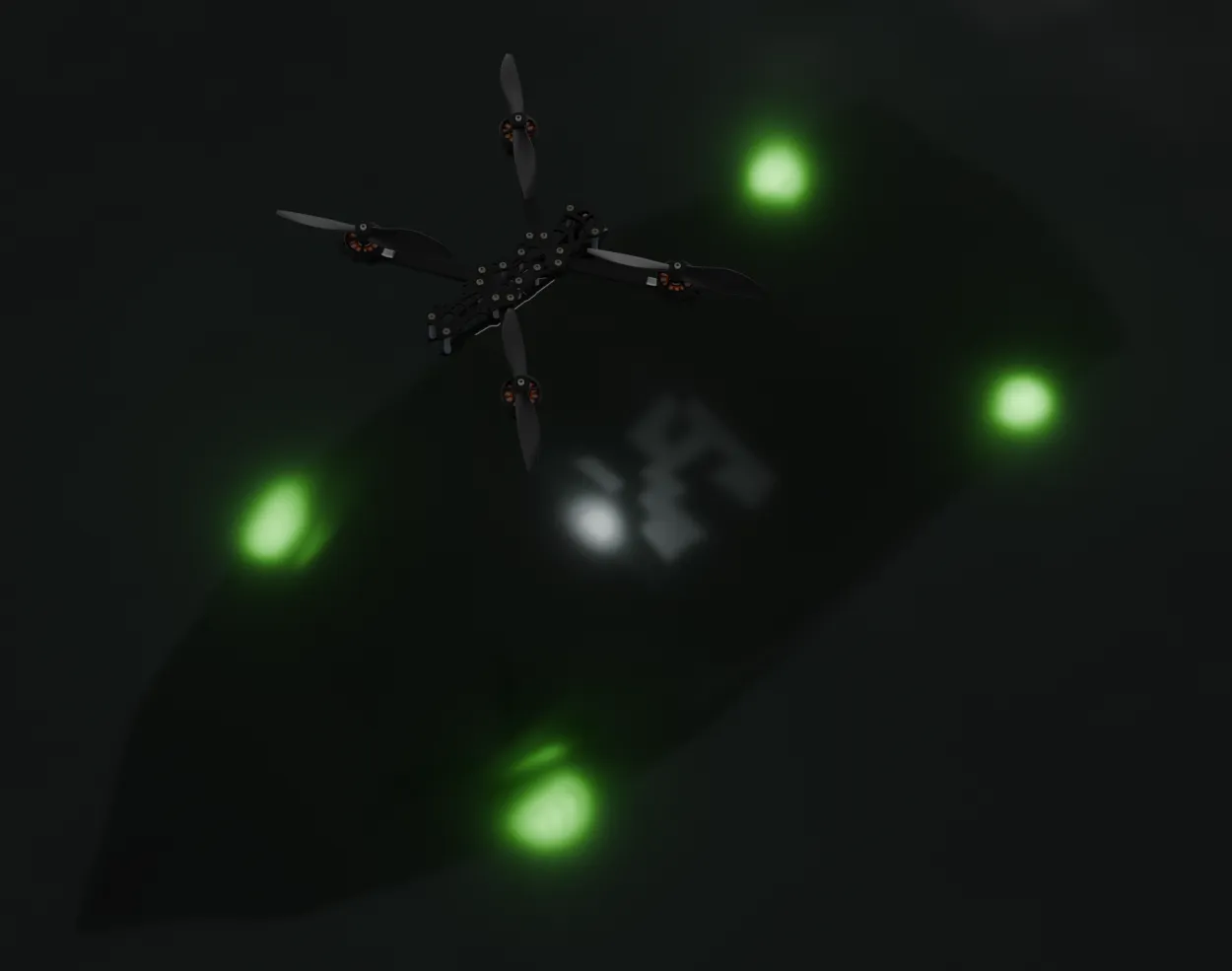
Render of Mobula on the surface with its bay hatch closed flush into the deck and its quadcopter airborne above the bow quarter
2027
Target season
532 nm
Optical uplink
5–10 MHz
Modulation rate
1 drone
Carried in the hull

About the project

Designed, built and tested by students at NTNU. The third machine from Dialga, after a 4G car and Ligmax. This one leaves the surface.

  • 01Hull

    CNC-cut aluminium plate, welded together.

  • 02Electronics

    Boards for the BMS, flight controllers and optical link.

  • 03Autonomy

    Control and perception, written in-house.

  • 04Mechanics

    All of the CAD and all of the machining.

01 In three dimensions

The whole assembly. Turn it yourself.

Click to zoom

Drag to orbit · click, then scroll, to zoom · 10 MB model

02 Partners

Thanks to our partners.

Without them there is no hull, no drone and no water time.

Sponsorship and partners

03 The vessel

One hull, two ways to move.

Planing across the surface or swimming beneath it, in one welded hull.
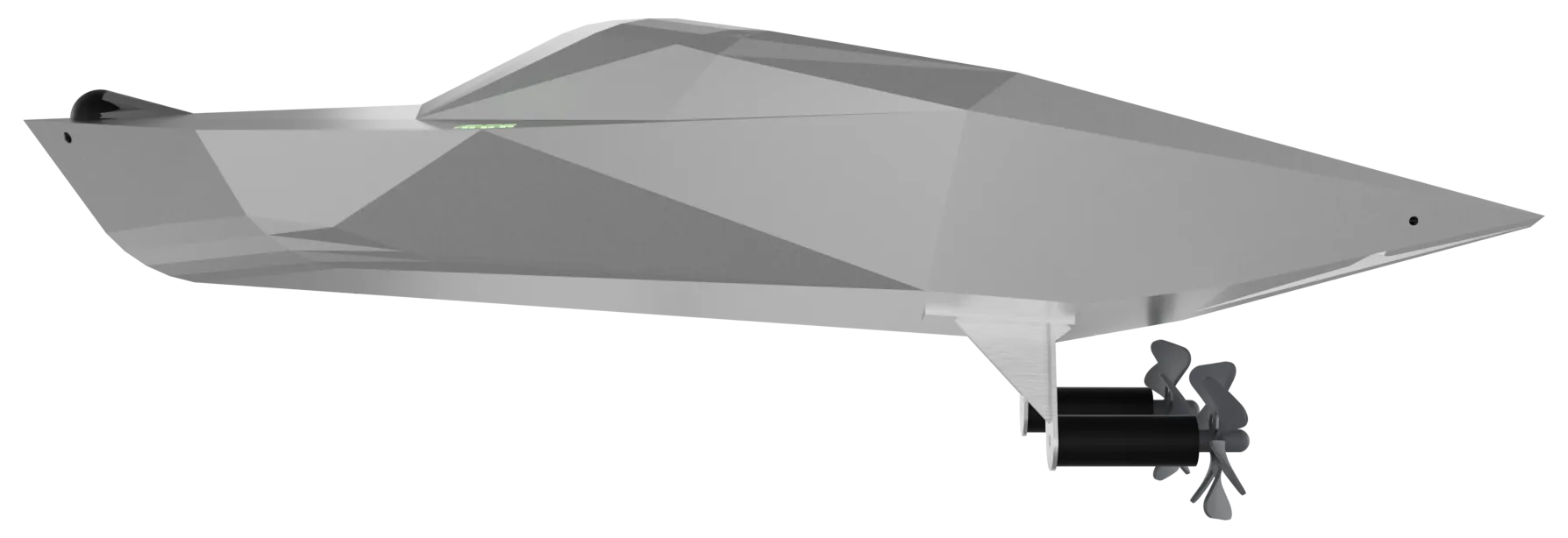
Pure side elevation of Mobula in its dive configuration: hatch closed flush into the deck, the lidar fairing at the tip of the bow, and the hull tapering aft to a single point
The dive configuration, in profile.
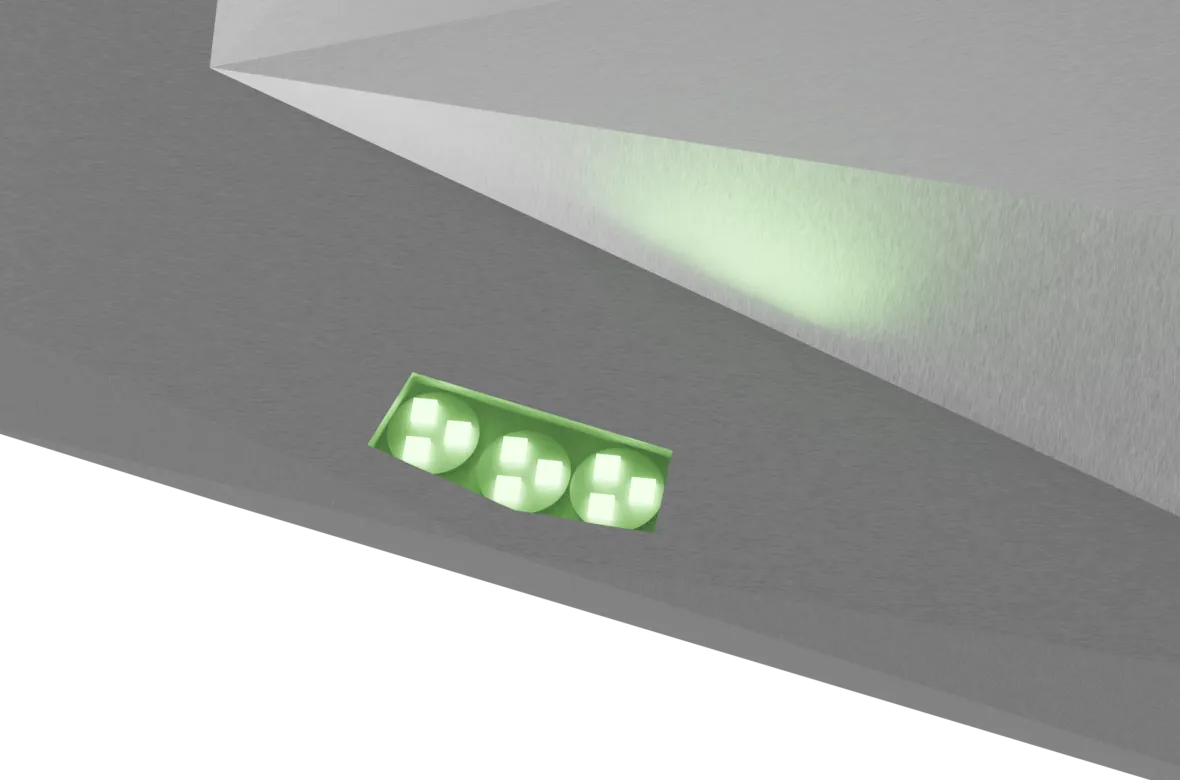
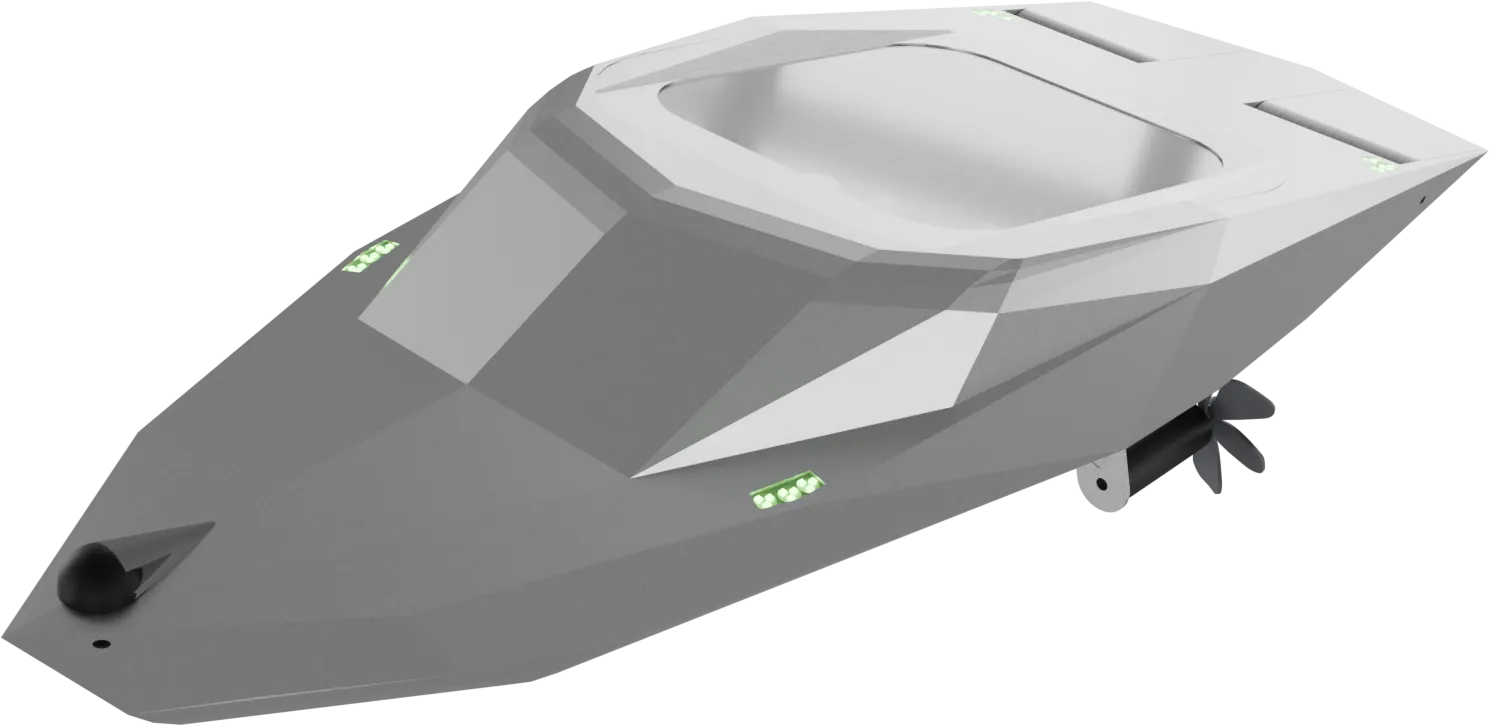
Three-quarter render of Mobula from ahead and above showing the faceted plate hull, the closed drone bay hatch and green LED modules along the side
01Construction

Cut from aluminium plate, welded together

Every crease is a weld between two CNC-cut plates, built to stay watertight below the surface.

Render of Mobula with its drone bay hatch closed flush into the deck and the quadcopter airborne above the bow quarter
02Mode 01 · Surface

Planing, with the bay shut flush

Fast and flat on twin propellers, with the drone away and nothing left standing above the deck.
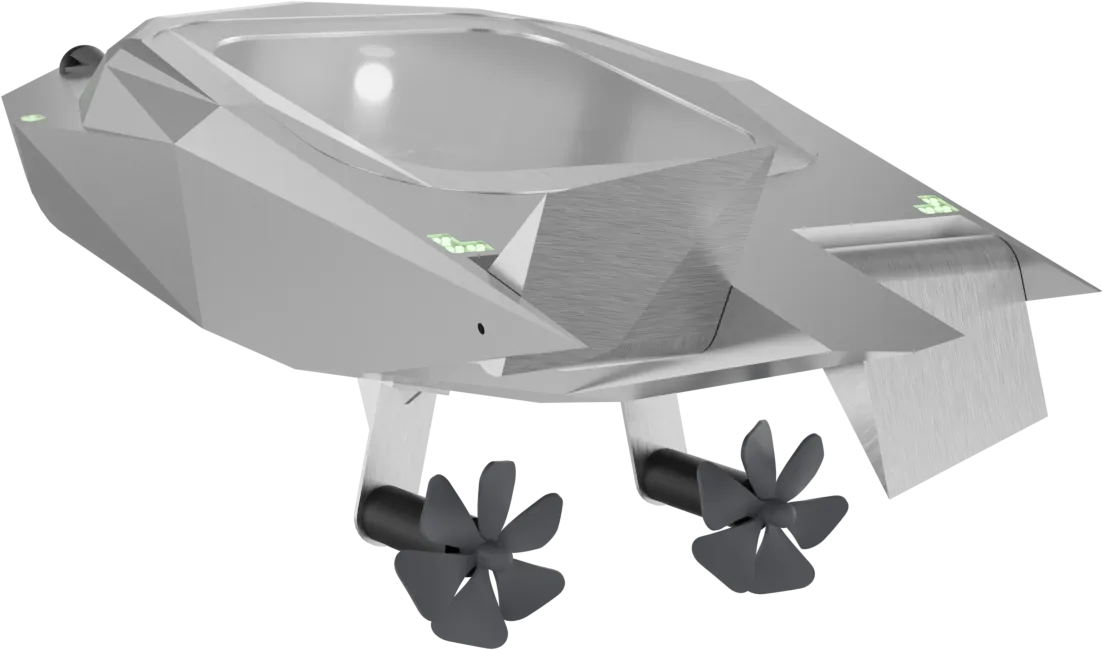
Render of Mobula from astern and above, the tapered stern edge split into three segments with the outer two angled in opposite directions, and the twin propellers on separate struts below the hull
Outer segments angled against each other, which rolls the vessel.
03Mode 02 · Submerged

One hull shaped for both jobs

It sheds water when it planes and leads it over the hull when it dives. The outer two stern segments pivot as fins and, with differential thrust on the two motors, steer it under water.
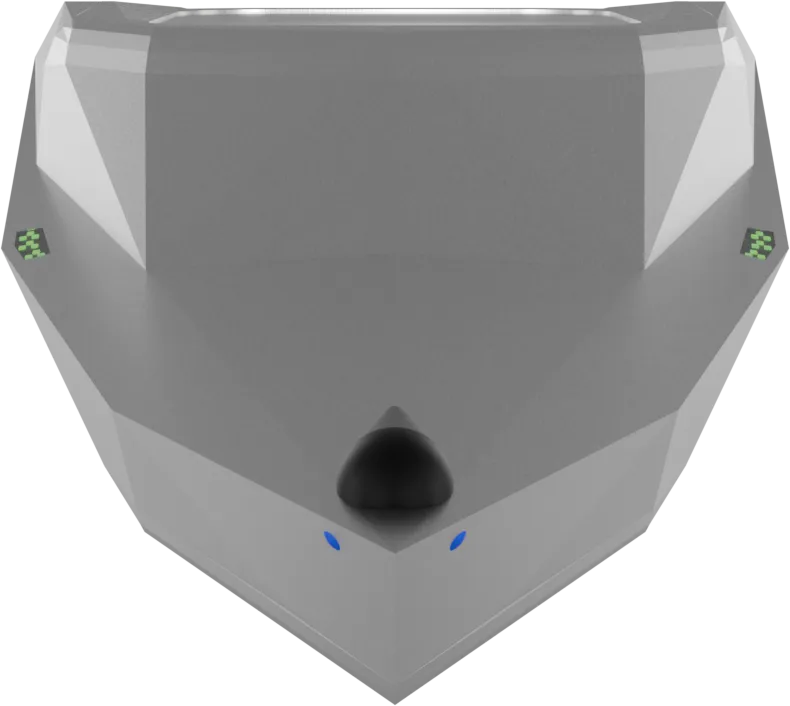
Head-on render of Mobula's bow showing the forward dome and a camera aperture either side of it, picked out in blue
Cameras picked out in blue for this render. On the vessel they are black.
04Sensing · Cameras

Eyes either side of the bow

Two cameras flank the bow dome, low and close to the waterline.
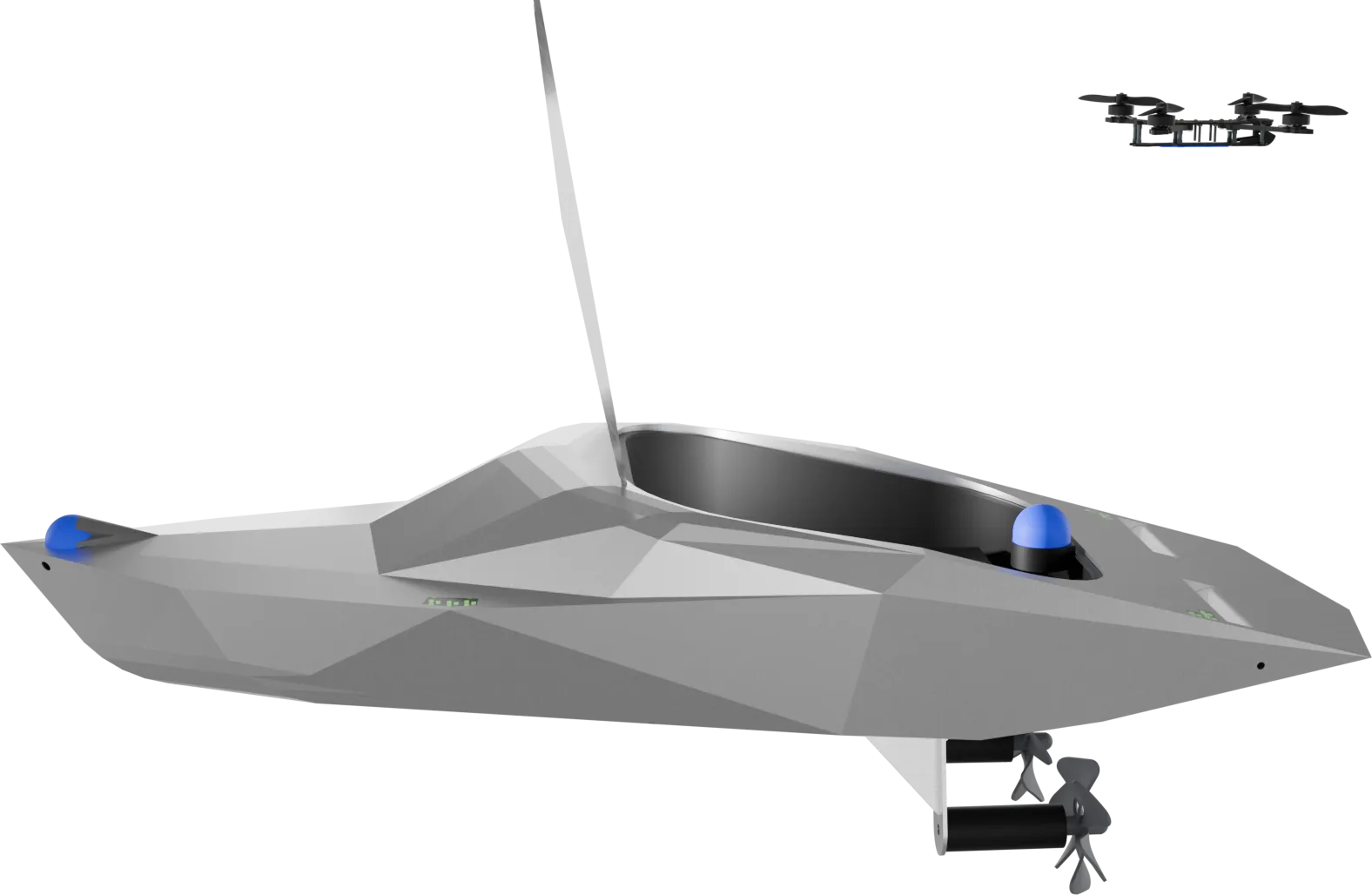
Side render of Mobula with the drone bay hatch standing open above the deck, one lidar dome at the tip of the bow and a second on the aft rim of the bay, both picked out in blue, and the quadcopter airborne off the stern
Lidars picked out in blue for this render; on the vessel they are black. Hatch open, because the aft one cannot be seen any other way.
05Sensing · Lidar

Two lidars, nowhere near each other

One in the bow fairing, one on the aft rim of the drone bay.

05 The drone

Built into the boat, not carried by it.

Its antenna and its eyes above the water. It launches off the deck, holds station overhead and lands back in the hull.
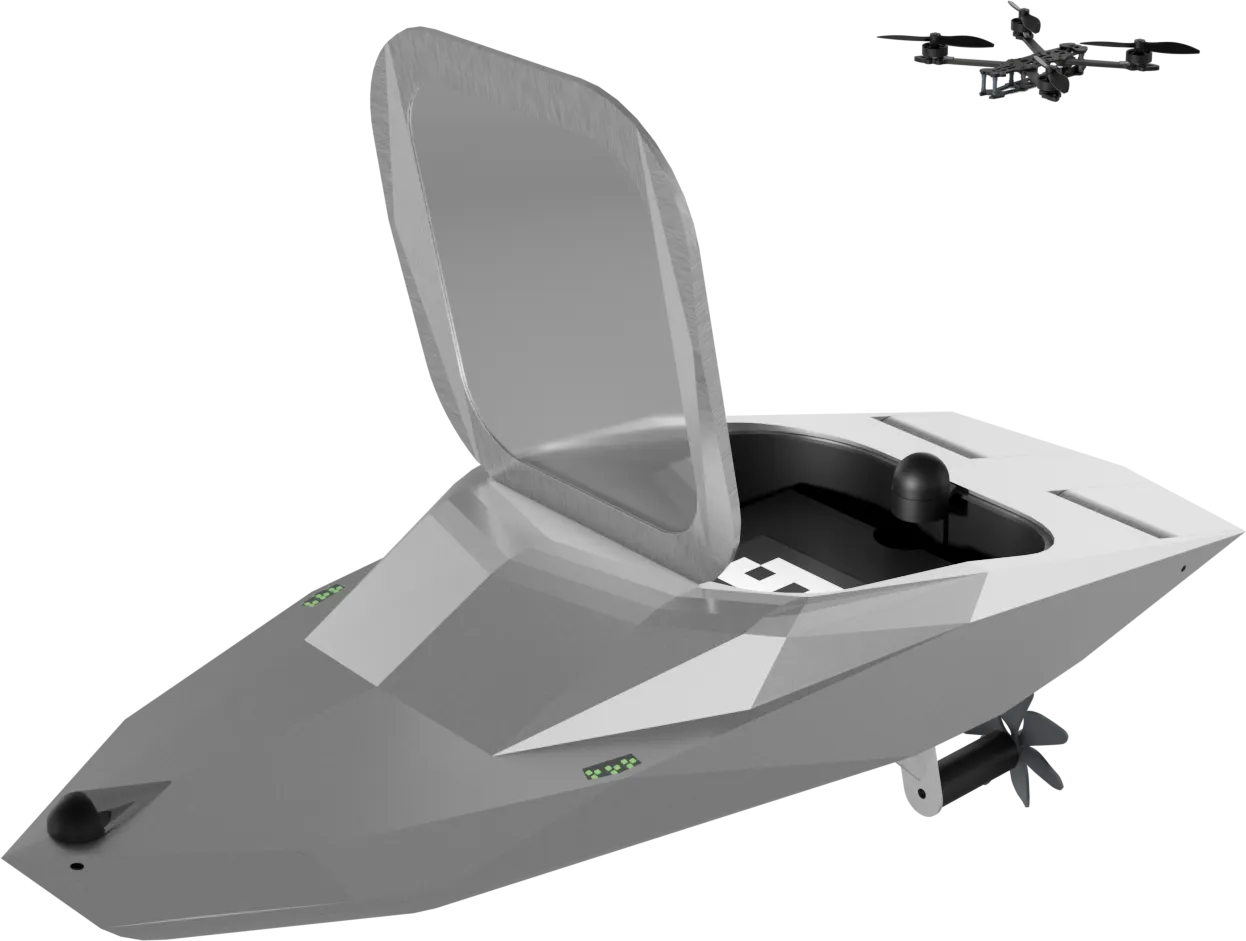
Render of Mobula on the surface with the bay hatch raised and the quadcopter airborne just off the deck
01Launch

The hatch is part of the hull

Shut, it is hull and the vessel can dive. Open, it is a launch deck.
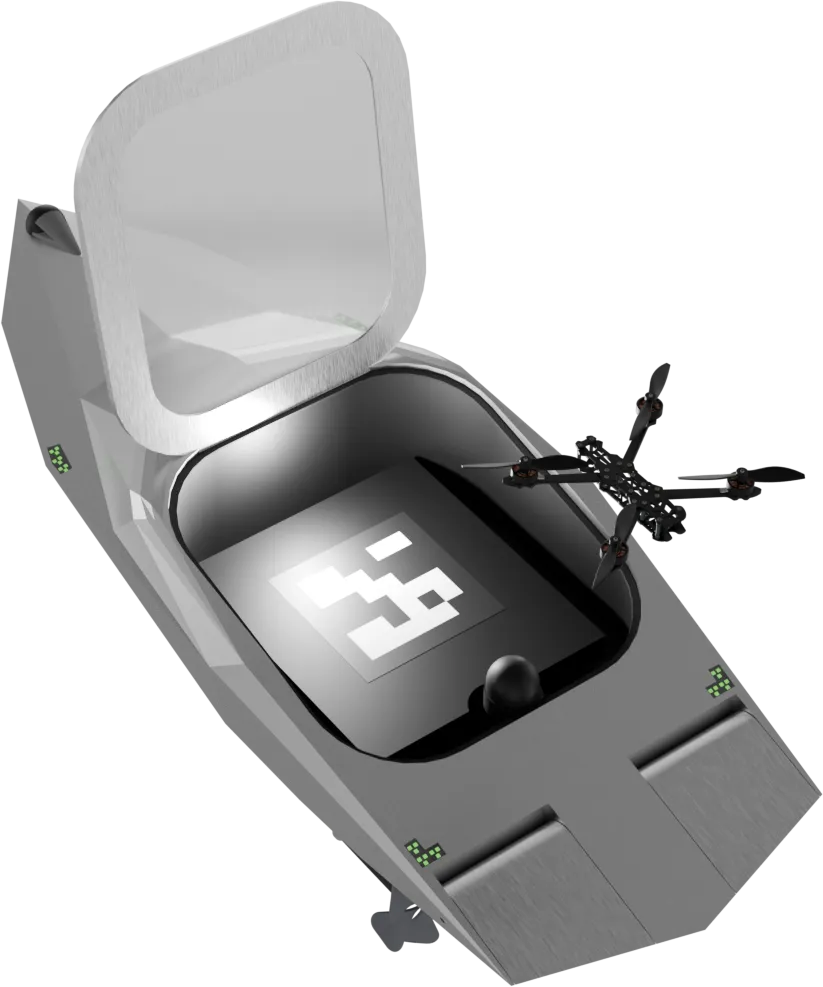
Top-down render looking into Mobula's open drone bay, with a fiducial marker on the bay floor and the quadcopter descending onto it
02Recovery

It lands on a marker, not a guess

The drone's downward camera reads the fiducial marker on the bay floor and lands on it.

06 Roadmap

The road to the 2027 season.

  1. 2026 · 01

    Design

    Hull, drone bay and emitter design settled.

  2. 2026 · 02

    Build

    Hull fabrication, propulsion and first power-on.

  3. 2027 · 03

    Test

    Surface runs, then dive trials, then the link.

  4. 2027 · 04

    Compete

    Its first competition season, as a complete vessel.

07 Team

Meet the team

NTNU students, hands-on with every subsystem from the hull to the autonomy stack.

  • Portrait of Amund Grønli

    Amund Grønli

    Subsystem lead

  • Portrait of Erling Kvalø

    Erling Kvalø

    Subsystem lead

  • Portrait of Karolina Ulfstedt

    Karolina Ulfstedt

    Subsystem lead

  • Portrait of Mathias Schiøtz

    Mathias Schiøtz

    Subsystem lead

  • Portrait of Mira Sannes

    Mira Sannes

    Subsystem lead

  • Portrait of Nicolai Lindeman

    Nicolai Lindeman

    Subsystem lead

  • Portrait of Noah Johansen

    Noah Johansen

    Subsystem lead

Everyone listed alphabetically by first name.

The work behind them

  • Naval architecture
  • Electrical & power systems
  • Optical communications
  • Autonomy & controls
  • Drone systems
  • Software & ground station