
Gold partner · 2027 season
Mobula× ScoutDI
ScoutDI is Mobula's first partner. A Trondheim drone company, backing a student-built submarine that carries its own drone.

Who ScoutDI are
Drones that go where people should not have to.
A Trondheim company with roots at NTNU. ScoutDI builds drones that inspect the inside of tanks, mines and other enclosed spaces where there is no GPS, so that people do not have to go in themselves.
Visit scoutdi.com ↗It is so inspiring to see the control ScoutDI achieves with their drones and the precision of their lidar scans. That is exactly why we are so happy to have them as a partner.
The partnership
What it is, in three lines.
- 01
Hardware for the build
ScoutDI supports Mobula with lidars and drone hardware. It goes straight into building the vessel, on the two sides of the project that are closest to their own work.
- 02
Gold partner for 2027
As a Gold partner, ScoutDI goes prominently on the hull and the team apparel, is named in press and competition material, and gets a demo day where we bring the vessel and the drone to their office.
- 03
From NTNU, backing NTNU
ScoutDI started at NTNU. It means a lot to the team that a company with those roots is now backing a new group of NTNU students building something of their own.
On the vessel
The two parts of Mobula closest to what ScoutDI does.
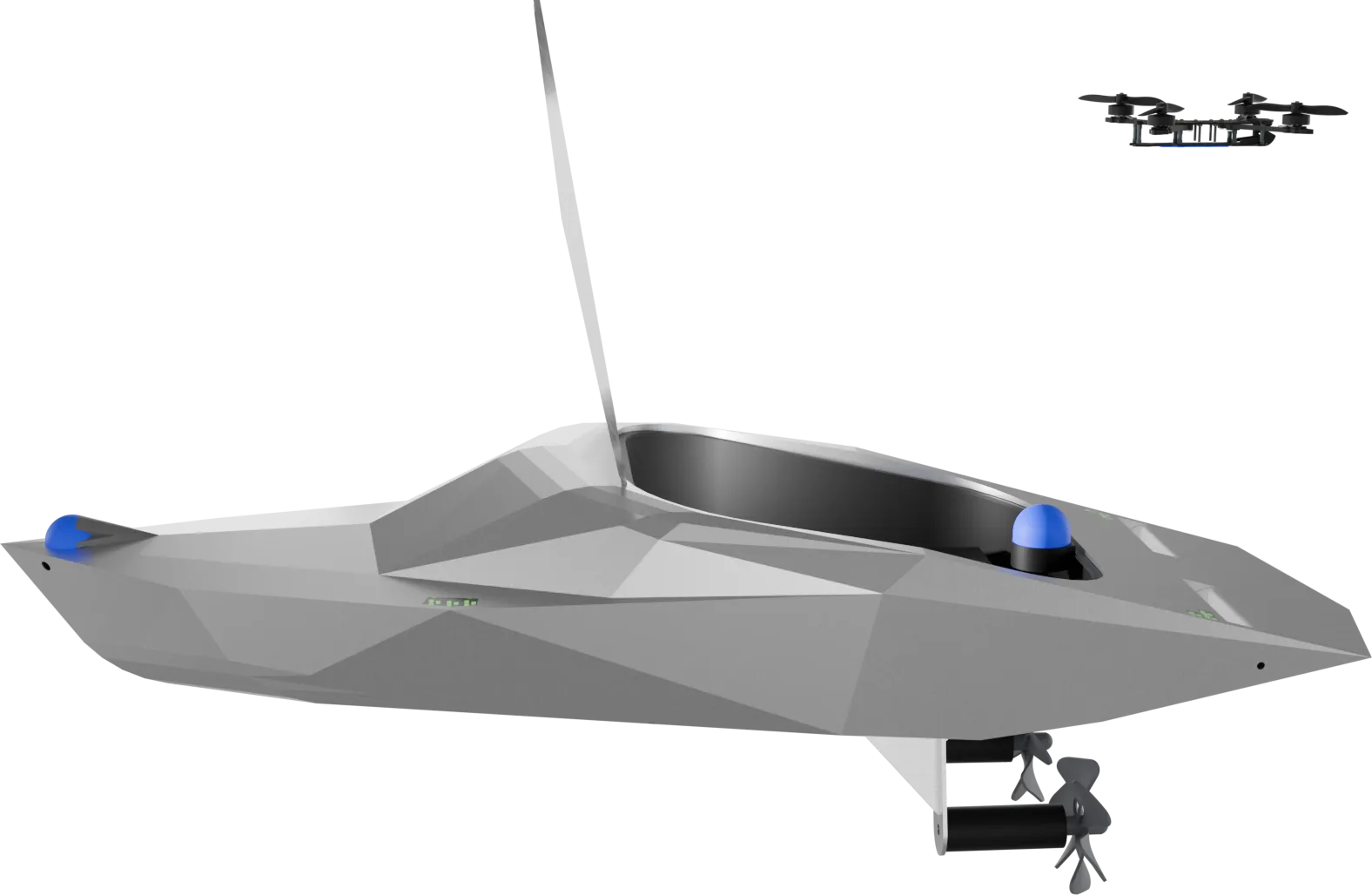
ScoutDI's work is drones and lidar. On Mobula those are the drone that lives in the hull, and the two lidars that navigate on the surface.
Two lidars, nowhere near each other
One sits in the fairing at the tip of the bow, the other on the aft rim of the drone bay. Both are picked out in blue in this render; on the vessel they are black.
The vessel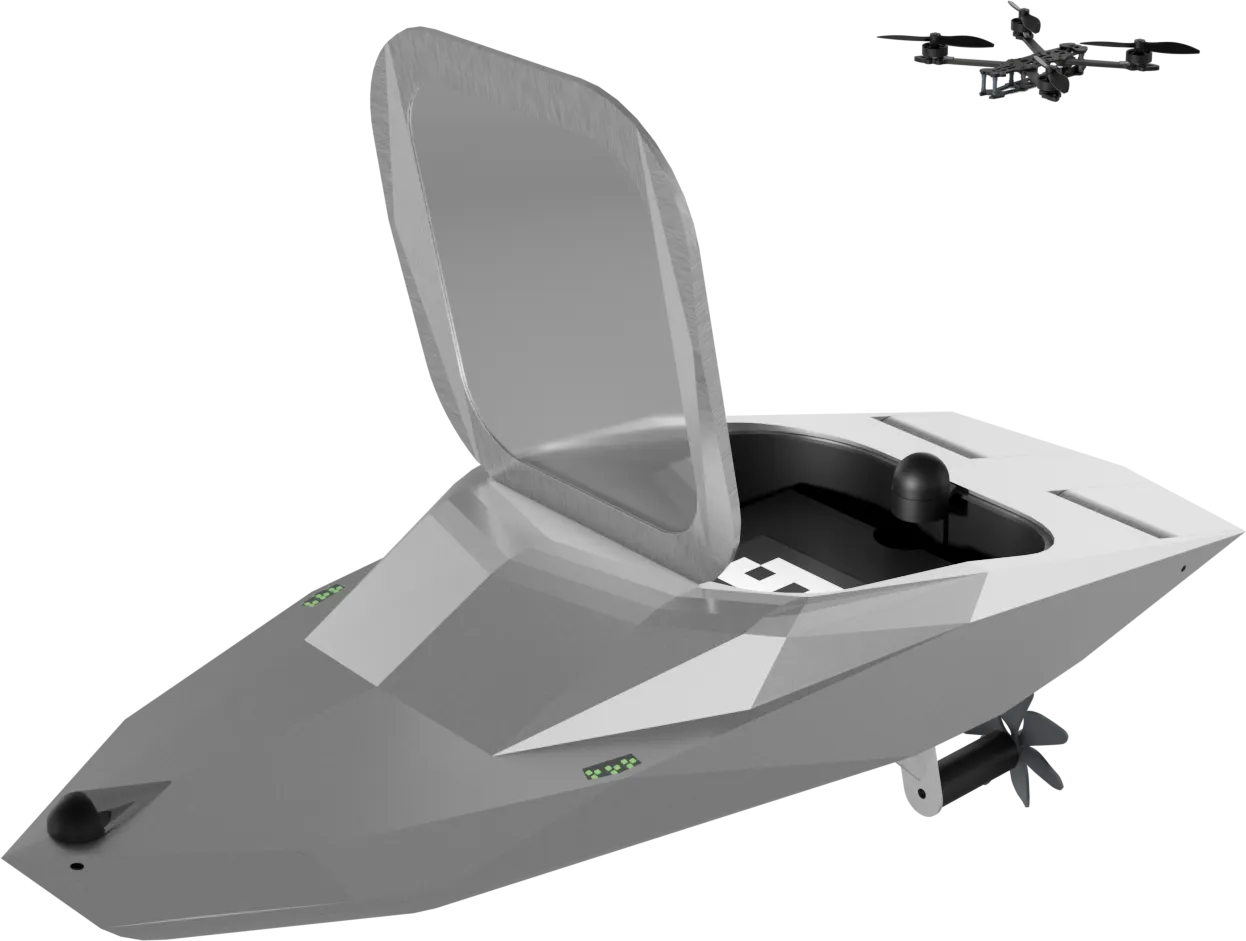
Built into the boat, not carried by it
The aircraft lives in a hatched bay amidships, launches off the deck, and comes back to a marked pad inside the hull. It is the vessel's eyes and its radio relay.
The droneThe visit
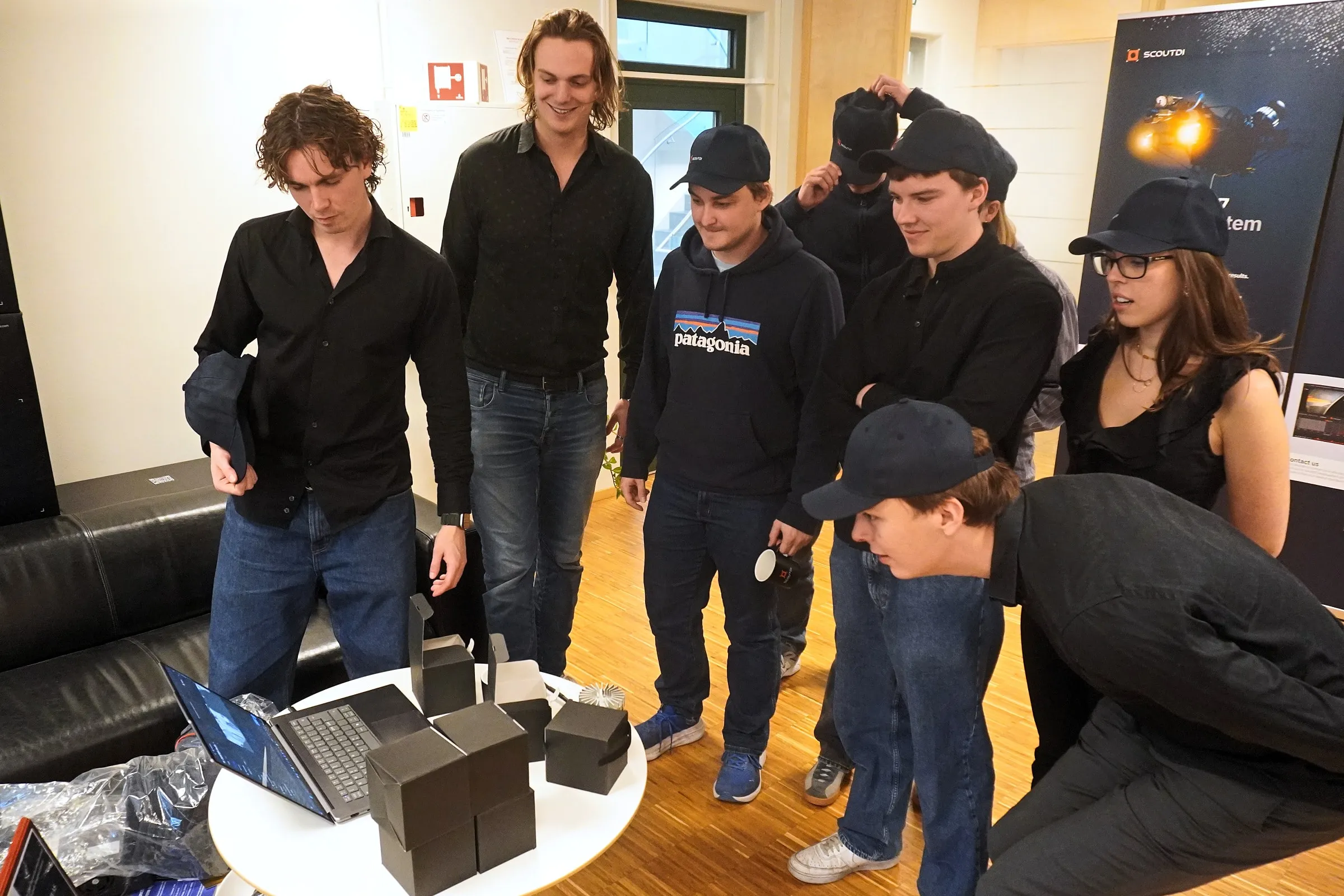
Every photo here exists twice.
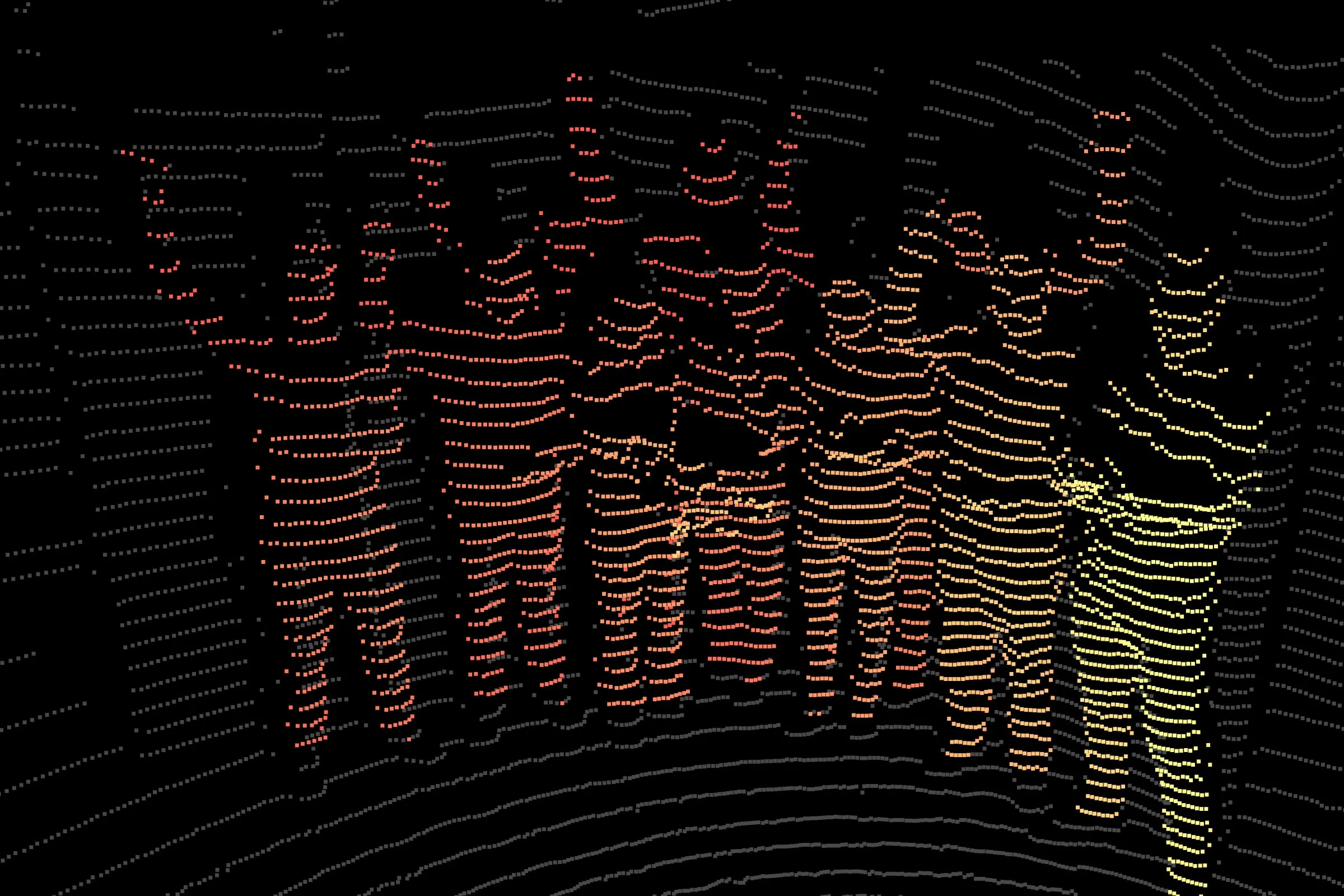
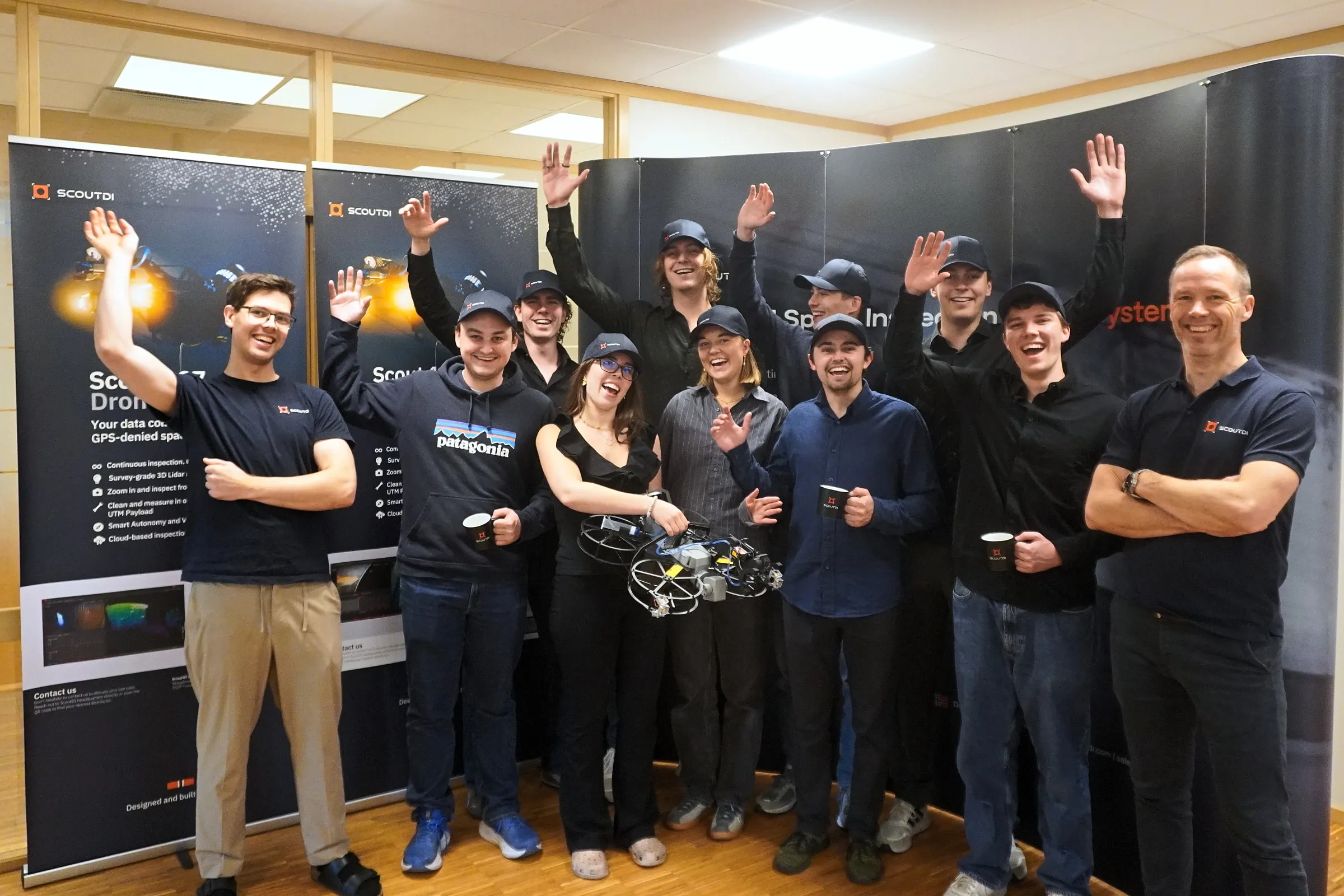
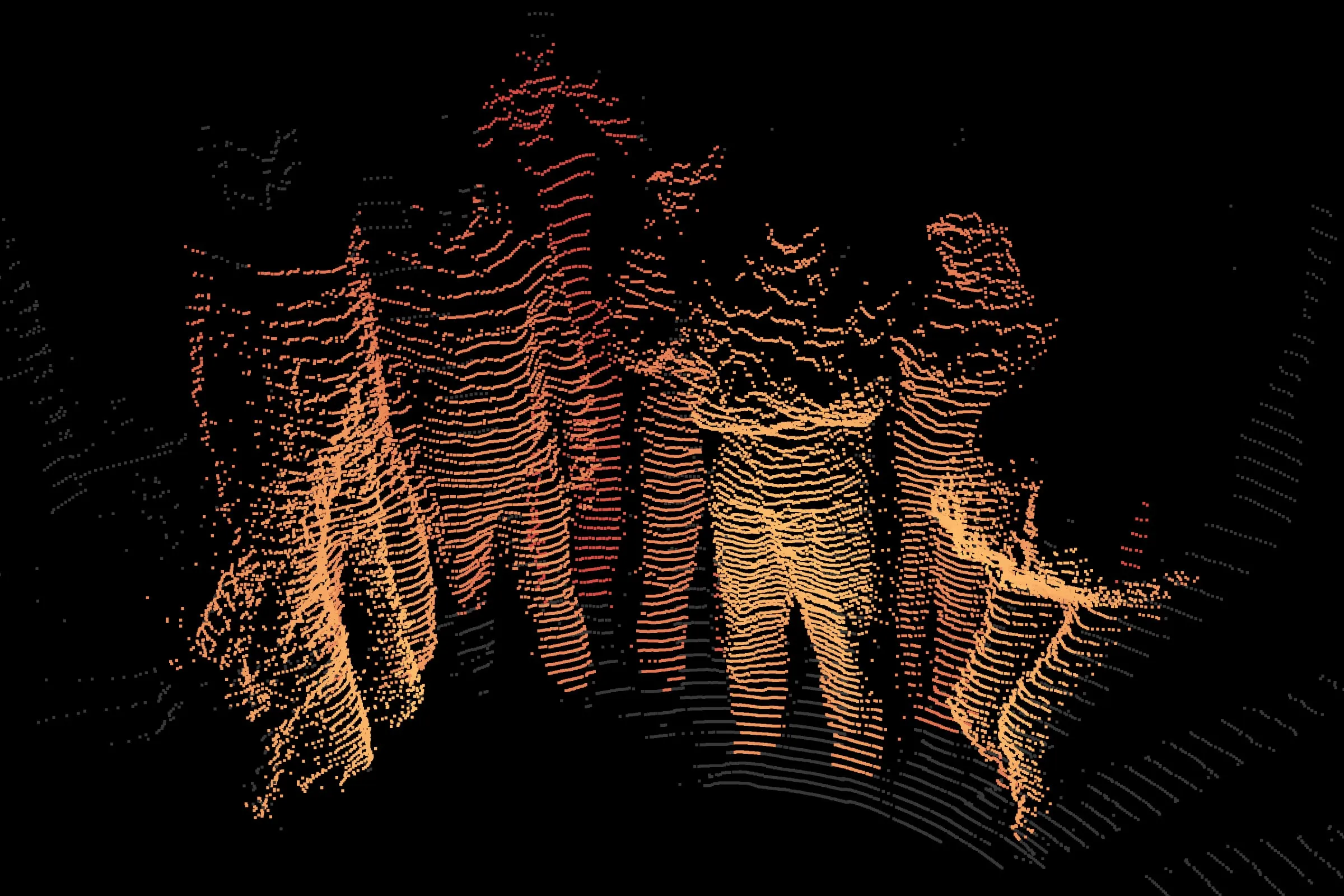
On 1 October 2026 the team visited ScoutDI in Trondheim to celebrate the partnership. We scanned the room with a lidar while the photos were taken, so each moment exists once as a picture and once as a point cloud.
Colour in the scans is distance from the sensor, and the room is grey. Nothing else was added: every dot is a point the lidar measured, and the scans that move are its own frames, played back at the speed it recorded them.

Thank you, ScoutDI.
We can't wait to show you what we build.